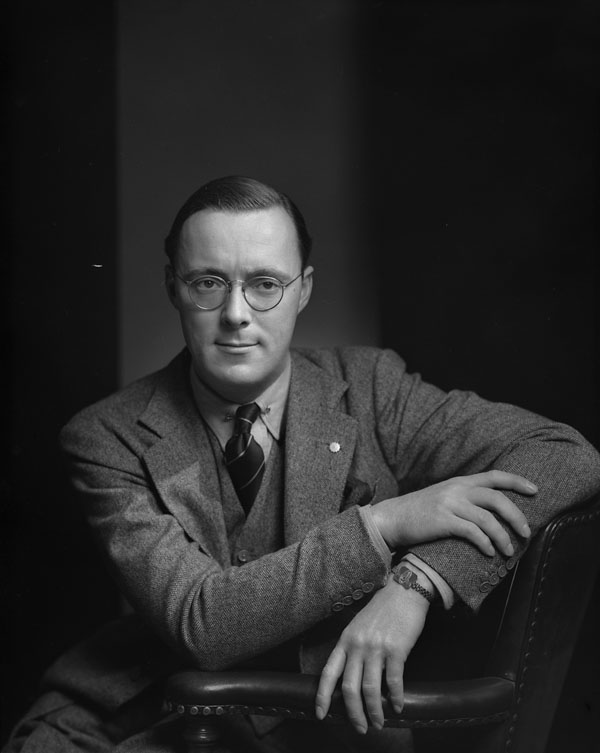
The Definitive Revelation: Prins Bernhard's Nazi Past Unearthed After His Death
For decades, the persistent rumors and allegations surrounding Prins Bernhard of the Netherlands and his alleged ties to the Nazi Party were met with staunch denials. Until his dying day in 2004, the Prince maintained his innocence, often vehemently refuting any suggestion of membership. Yet, a bombshell discovery made years after his passing definitively shattered this long-held narrative, providing undeniable proof that Prins Bernhard was indeed a member of the NSDAP – Adolf Hitler's Nazi Party. This posthumous revelation, brought to light through diligent archival work, irrevocably reshaped historical understanding and ignited fresh debate about the complex legacy of a prominent figure in Dutch history.
The uncovering of his original Nazi Party membership card in his private archives, years after Prins Bernhard's Overlijden, marked a pivotal moment. It wasn't merely a copy or a speculative claim, but the physical evidence that had eluded historians for so long. This article delves into the details of this historic find, explores the Prince's consistent denials, and examines the profound implications of this ultimate truth.
The Posthumous Revelation: Unearthing the Truth After Prins Bernhard's Overlijden
The pivotal discovery that finally brought Prins Bernhard's Nazi Party membership to light occurred not during his lifetime, but significantly, years after his passing. It was in 2014, a decade after Prins Bernhard's Nazi Party card found. The man responsible for this groundbreaking find was Flip Maarschalkerweerd, the former director of the Royal House Archives. Following the prince's death in 2004, Maarschalkerweerd embarked on the extensive and meticulous task of inventorying the late prince's private archive, located within Paleis Soestdijk, one of the Dutch royal residences. It was amidst this vast collection of personal papers, tucked away in an unassuming folder, that he stumbled upon the definitive piece of evidence: Prins Bernhard's original NSDAP membership card.
This was no ordinary document. It bore the hallmark of authenticity – an original membership card, complete with the prince's name and details, solidifying the long-speculated but always denied connection. The significance of this find cannot be overstated. It was the physical, irrefutable proof that had been sought by historians for decades, confirming what many had suspected but lacked the hard evidence to substantiate. The card itself served as a silent witness, speaking volumes about a past the prince had desperately tried to bury, a truth that only emerged from the shadows following his death.
The discovery was subsequently revealed by Maarschalkerweerd in his book, De Achterblijvers (The Stay-Behinds), which brought the revelation to public attention through the NRC newspaper. The timing, a decade after Prins Bernhard's passing, ensured that the truth could finally emerge without the direct personal or political repercussions that might have complicated its release during his lifetime. It underscored the persistent nature of historical inquiry and the eventual triumph of evidence over decades of personal denial.
A Legacy of Denial: Bernhard's Stance Until the End
Throughout his extensive public life, Prins Bernhard was resolute in his denial of any formal ties to the Nazi Party. This stance was maintained with unwavering consistency, even as historical evidence began to mount against him. In 1996, for instance, historians announced they had located a copy of his membership card in archives in the United States. Furthermore, correspondence dating back to 1936, concerning the alleged cancellation of his membership, had also surfaced. This particular year was significant as it coincided with his engagement to Princess Juliana of the Netherlands, a period when dissociating from such affiliations would have been politically expedient, if not essential.
Despite these accumulating indications, Prins Bernhard steadfastly refused to concede full membership. His admissions were limited to acknowledging a brief period of affiliation with a specific section of the SS, which he portrayed as a mere formality or a youthful indiscretion, rather than an ideological commitment to Nazism. He carefully distinguished between peripheral association and full party membership, a distinction he fiercely defended.
Perhaps the most poignant and definitive of his denials came in a series of interviews with the Dutch newspaper De Volkskrant, conducted shortly before his death. In these candid conversations, the prince delivered what he presented as a final, solemn declaration on the matter: “I can declare with my hand on the Bible: I was never a Nazi. I never paid party membership, I never had a membership card.” These words, spoken with gravity and presented as an ultimate testament to his truth, now stand in stark contrast to the physical evidence uncovered after Prins Bernhard's Overlijden. His posthumously proven membership completely undermines these final, emphatic assurances, highlighting the depth of the secret he carried to his grave and the lengths to which he went to protect his public image and the integrity of the Dutch monarchy.
Historical Context and Significance: Why This Matters
The revelation of Prins Bernhard's NSDAP membership, particularly after his death, holds immense historical significance, reverberating far beyond a mere biographical detail. It forces a re-evaluation of his entire public persona and his role in Dutch history, especially given his post-war image as a resistance hero and a figurehead of reconciliation. To understand its gravity, one must consider the historical context of his early life.
Born into German nobility, Bernhard von Lippe-Biesterfeld's education and early career trajectory were firmly rooted in the German society of the 1930s, a period marked by the meteoric rise of Adolf Hitler and the Nazi Party. While many Germans joined the party out of conviction, others did so for career advancement, social conformity, or even perceived necessity in a rapidly changing political landscape. For a young nobleman seeking to make his way, affiliation could open doors, even if the ideological commitment was complex or opportunistic. The discovery of his original card suggests a level of engagement beyond what he admitted, potentially extending to the very act of formalizing his ties.
For the Netherlands, a nation that suffered immensely under Nazi occupation during World War II, the idea that a prominent figure in their royal family had once been a member of the very party responsible for their subjugation is profoundly unsettling. It challenges the national narrative and injects a layer of moral ambiguity into a figure widely admired for his wartime efforts and his contributions to post-war Dutch society, such as the establishment of the Bilderberg Group and the Prince Bernhard Cultural Fund. This revelation underscores a critical lesson in historical inquiry: that historical figures, particularly those in positions of power, often harbor complex and sometimes contradictory pasts, and that truth can take decades to fully emerge. The complete picture often only develops when all personal and political filters are removed, as was the case with Prins Bernhard's Overlijden.
The Aftermath: Impact on His Legacy and Institutions
The public unveiling of Prins Bernhard's original NSDAP card ignited a fierce public and academic debate in the Netherlands and beyond. It forced a national reckoning with a painful aspect of their history and the perceived integrity of their royal family. The general reaction was one of shock and disappointment, compounded by the years of persistent denial by the Prince himself. For many, it felt like a betrayal of trust, despite the time that had passed since the events themselves.
One tangible consequence of this posthumous revelation was the decision by the Prins Bernhard Cultuurfonds to change its name. Founded in 1940 by Prince Bernhard himself during the early days of World War II, the fund played a vital role in supporting Dutch culture and nature. Following the discovery of the Nazi Party card, the board of directors opted to drop "Prins Bernhard" from its official title, rebranding itself simply as "Het Cultuurfonds" (The Culture Fund). This decision, made in 2014, was a direct acknowledgment of the historical controversy and an effort to ensure the fund's work and reputation remained untainted by the shadow cast over its founder's early life.
The impact on Prins Bernhard's overall legacy is undoubtedly significant. While his contributions to the Netherlands, particularly during the war and in the post-war reconstruction and cultural landscape, are undeniable and remain part of historical record, the Nazi membership card adds a challenging dimension. It serves as a stark reminder that even figures held in high esteem can possess complex, morally ambiguous pasts. Historians and biographers are now faced with the task of integrating this definitive piece of evidence into a more nuanced and complete understanding of his life, acknowledging both his significant positive contributions and the undeniable truth of his early political affiliations. The definitive proof, emerging after Prins Bernhard's Overlijden, ensures that future generations will approach his story with a more critical and comprehensive perspective.
Conclusion
The discovery of Prins Bernhard's original NSDAP membership card, a full decade after Prins Bernhard's Overlijden, stands as a testament to the persistent pursuit of historical truth. For over half a century, the prince vehemently denied any formal ties to the Nazi Party, even swearing on the Bible to his innocence. Yet, the meticulous work of an archivist unearthed irrefutable evidence that definitively contradicted his lifelong narrative. This posthumous revelation not only provides closure to a long-standing historical debate but also profoundly impacts our understanding of a pivotal figure in modern Dutch history. It serves as a powerful reminder that history is rarely simple, and even the most revered figures can harbor secrets that, when finally revealed, force a re-evaluation of their entire legacy. The unvarnished truth, often emerging from the quiet corners of archives, eventually prevails, reshaping collective memory and contributing to a more complete and accurate historical record.